Prosthesis

The BioBlock® concept is a biomechanical concept developed by BTI, aimed at the lasting success of treatments.

< Oral implantology
Know more
Contact
Home >
Solutions and Products >
Oral implantology >
Prosthesis >

BioBlock® implies performing prosthetic gingival restorations using components that are biologically adapted, like the UnicCa® surface implant, the UNIT® or MULTI-IM® transepithelial abutments and interface, the latter with Ti-Golden® surface treatment.

Features and advantages of the BioBlock®®

  1. Hermetic seal at the implant-abutment-prosthesis join, thanks to BTI's great machining precision: prevents bacterial filtering.
  2. Effective sealing of the tissues around the abutment: avoids bacteria getting in and gingival retraction.
  3. The optimum morphology of the abutment's upper connection and the fact that impressions are taken at a supragingival level: allows the prosthesis to be made with a perfect passive fit.
  4. The combination of 2 screws, with Ti-Black® treatment: enables better distribution of the stresses and reduces risk of fracture.
detalle de protesis dental bioblock bti
EBOOK

Transepithelial for immediately loaded single-unit prostheses

The use of intermediate abutments provides important advantages, such as a lower risk of peri-implantitis, better load distribution and greater contact with the soft tissues thanks to their physicochemical properties. Learn more about this BTI solution by downloading this free ebook.

Download Ebook
pilares dentales square bti

Square Abutments

Square Abutments: the evolution of the interfase concept in prosthodontics.

  • Maximum retention of the structure thanks to the 4-point non-rotational base.
  • Better aesthetics and vascularisation of soft tissues thanks to the bio transgingival profile.
  • Efficient sealing of the tissue around the abutment.
  • Suitable for CAD/CAM and traditional prostheses in fixed, single and multiple prostheses.

They have been designed for the production of the direct to implant single and multiple fixed prostheses, in digital and conventional laboratory processes.

Why Ti-Golden®?

It improves aesthetic and functional predictability by increasing tissue biocompatibility and avoiding grey areas in thin gingival biotypes.

Why Ti-Black®?

It prevents the loosening of screws and improves biomechanical behaviour, increasing the preload by treating BTI screws with tungsten carbide.
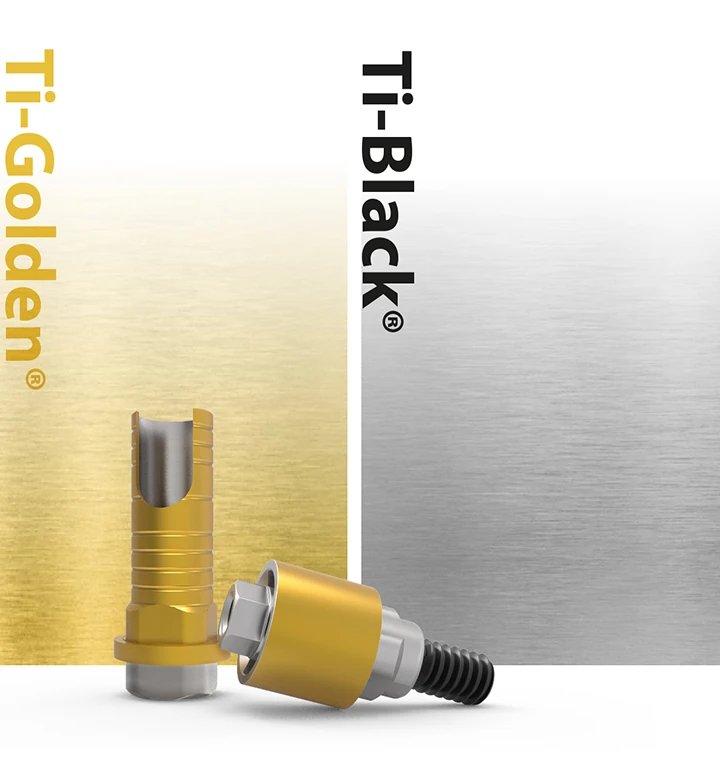
surface treatments of the bti screws
scan bodies dentales bti

Scan bodies

To facilitate intraoral scannings, both direct to the implant and on UNIT® and MULTI-IM® transepithelials, BTI offers you its scan bodies.

  • Made entirely of titanium with a surface heat treatment to facilitate reading by the intraoral scanner.
  • We match the diameter of the body to the diameter of the prosthetic platform, in order to facilitate direct connection to the implant in subcrestal position or when the formation of the soft tissues requires a smaller diameter.
  • The connection information and corresponding platform diameter are laser engraved for immediate identification.

Scan bodies for long edentulous sections

"We have introduced a family of MULTI-IM® transepithelial scan bodies to prevent data loss during intraoral scanning in long edentulous sections, designed to improve accuracy and facilitate scanning. They are available in two body heights (5.5 mm and 10.5 mm) for screw-retained multi-unit structures with the various prosthetic abutment diameters (Ø 3.5, Ø 4.1, and Ø 5.5) available for MULTI-IM®."

In addition, they include screw-on arms in lengths of 3, 5, and 7 mm, allowing adaptation to different span lengths and cover the entire length of the edentulous area.
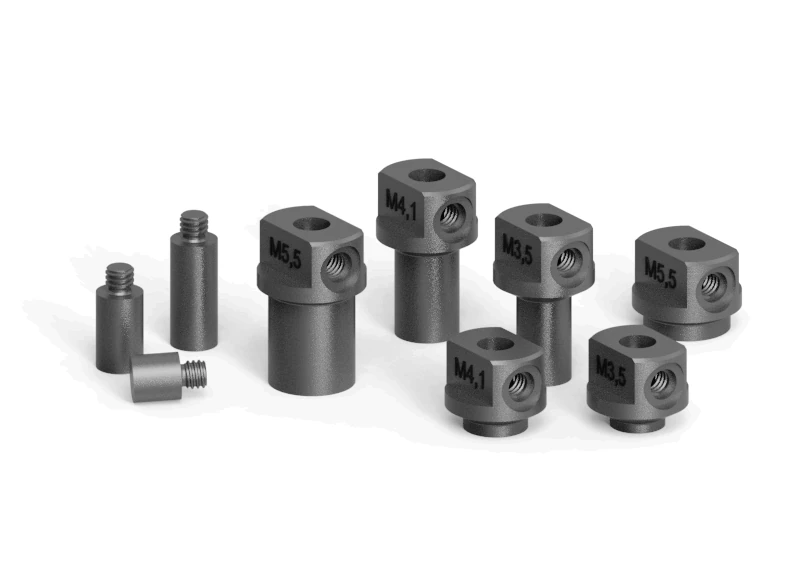
scan bodies long edentulous sections
dental digital analogues bti

Analogues

A series of digital analogues are also available for 3D printed models, allowing the digital flow to be completed.

Related documents
Square aesthetic abutments

Square aesthetic abutments

New range of square abutments for direct to implant prostheses, with a BIO Profile for long-term maintenance of the gingival tissue.

Size 1.05 Mb
Download

Want to know more about prosthesis?